
Forgotten Soldiers
Corporal Job Maseko was a Black South African war hero during the Second World War (WWII), who received the Military Medal for his bravery fighting for South Africa and the Allies. Yet post-war, Maseko endured South Africa’s new Apartheid state in obscure poverty. Born in 1922, Maseko’s story offers a glimpse into the significant role of Black South African veterans within South Africa’s military effort during WWII. A role that has too often been forgotten or marginalised within military history.
Before the war, Maseko worked as a miner at the Daggafontein Wes gold mine. WWII provided new opportunities for black South Africans and Maseko enlisted and trained with the South African Native Military Corps. Maseko’s mining skills would later play a crucial role in his wartime heroics.
In June 1942, Maseko was captured during the fall of Tobruk and became a Prisoner of War (POW) under German forces.
While working as a POW unloading German cargo vessels in Tobruk harbour, Maseko used his mining expertise to create an explosive device from a milk tin, a fuse and gunpowder. He single-handedly placed this device on a German ship, causing significant damage and loss to German supplies, while demonstrating extraordinary courage and ingenuity. This act earned him the Military Medal for “ingenuity, determination and complete disregard for personal safety”.
Controversy surrounds Maseko not receiving the Victoria Cross for his wartime actions. Artist Neville Lewis suggested that Maseko was denied the Victoria Cross (VC) Medal due to racial discrimination. However, extensive research by Professor Deon Fourie reveals that this claim lacks evidence. Fourie argues that the process for awarding the VC was rigorous and specific. Maseko’s actions, while indeed brave, did not meet the specific criteria for the VC, which required direct and immediate danger under enemy fire.
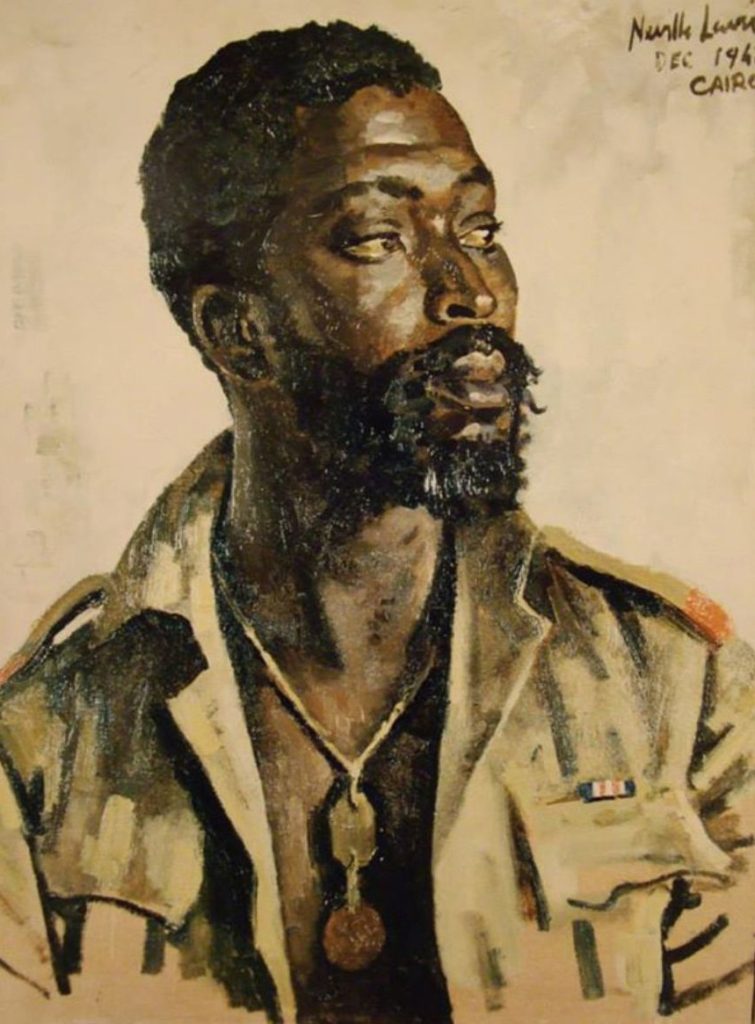
Portrait of Cpl Job Maseko painted by war artist Neville Lewis in Cairo 1942
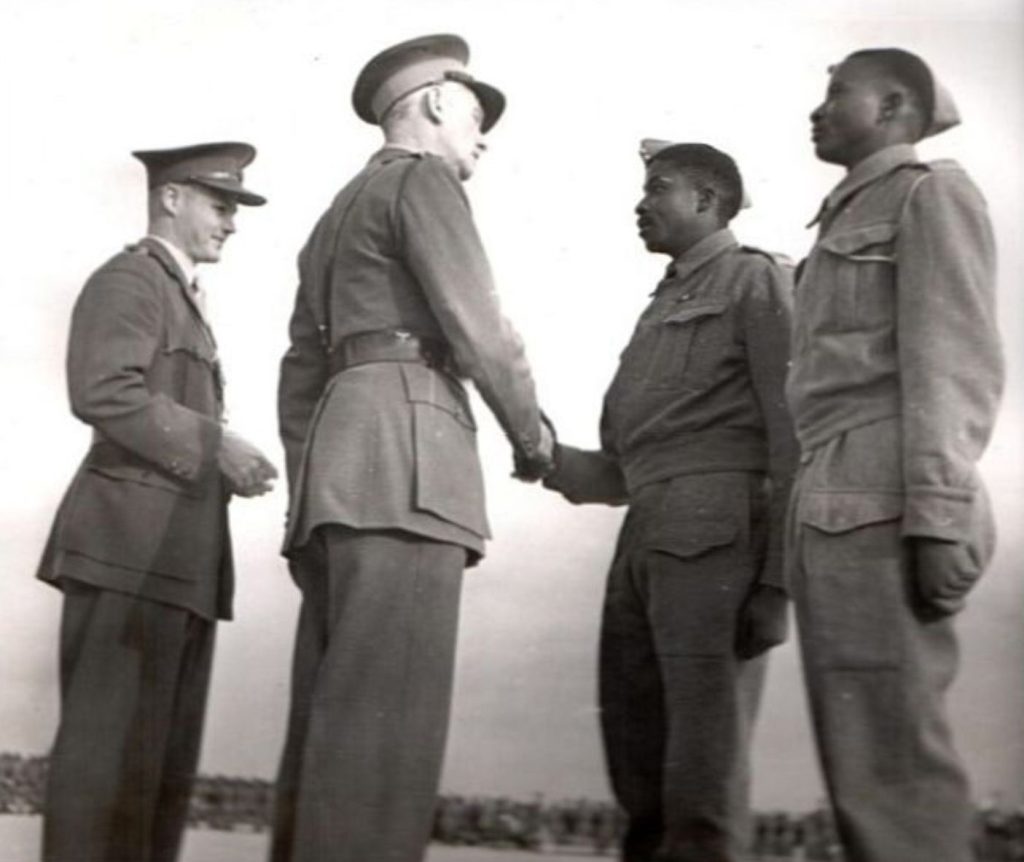
Cpl Job Maseko receiving his Military medal
Maseko’s post-war life in South Africa’s Apartheid state was difficult, and he received no recognition for his work during the war. Most African ex-servicemen who had cherished high hopes of their post-war world were disillusioned when they could not find employment based on the new skills they had acquired in the army. Black veterans found that the standard of living and opportunities to which they were accustomed, while members of the South African forces, were no longer applicable.
In addition, the Apartheid-based general rule governing pension awards was that Coloured pension scales should amount to three-fifths and African pension scales to two-fifths of the rate applicable to whites. For Maseko and members of the South African Native Military Corps post-war South Africa was very much the same as the pre-1939 South Africa.
Maseko died in 1952 after he was struck and killed by a train. At the time of his death, he was so poor that his funeral was paid for by borrowed and donated funds. He was buried in the Payneville Township Cemetery in Springs, South Africa.
Despite not receiving the VC, Maseko’s Military Medal remains a significant honour, recognising his gallantry and devotion to duty. His story continues to inspire and provoke new research into his previously marginalised area of history regarding Black South African soldiers who contributed enormously to South Africa’s war effort during WWII.